Step by step · Label
How to Read the Nerve Savior Supplement Facts Label in 5 Steps
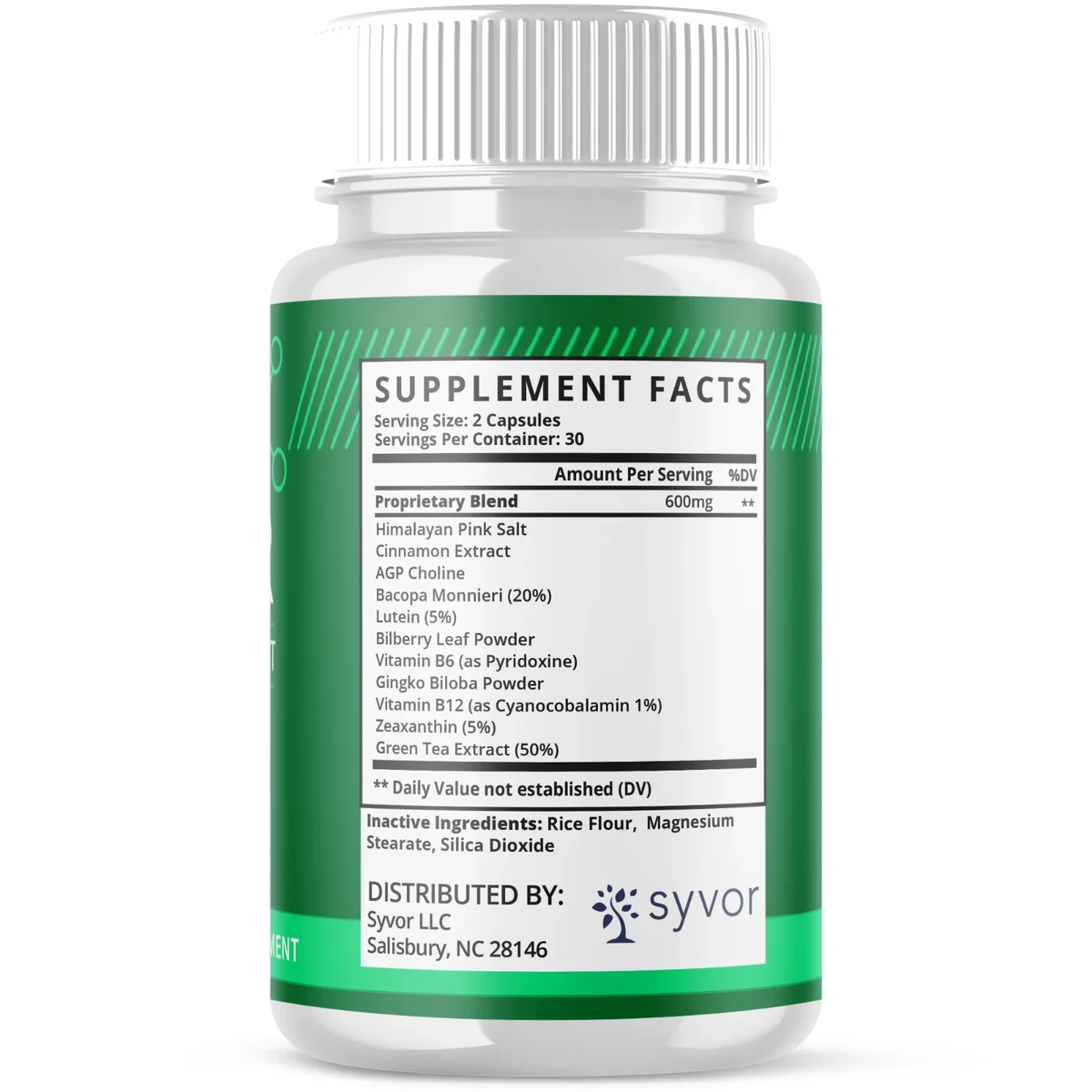
Read the Nerve Savior label in five steps: find the serving, spot the single 600 mg blend, use the list order, decode the percentages, then check the inactive ingredients and distributor. The label names 11 ingredients but prints no single amount, so you can only work out the most each one could weigh.
Written by the Nerve Savior editorial teamMedically reviewed by Dr. Baldev Sandhu, MD, PhysicianReviewed · 9 min read
At a glance
Key facts
- Serving: 2 capsules. Servings per container: 30. Capsules per bottle: 60.
- All 11 active ingredients sit in one 600 mg proprietary blend, listed heaviest first.
- Fillers: rice flour, magnesium stearate and silica, the last one printed as Silica Dioxide.
- Distributor on the label: Syvor LLC, Salisbury, NC 28146. The maker is not published.
- Not published: every single ingredient amount, what the percentages measure, the cinnamon species and the capsule shell material.
- Buying facts for context: $19.95 per 60-capsule bottle on the eBay listing, with 30-day returns (read October 12, 2026).
What should you know before you read the panel?
A Supplement Facts panel is like a short recipe card. It tells you the serving, the ingredients and who sells it. It does not always tell you how much of each thing you get. Nerve Savior is a good example of that gap.
Have the bottle in your hand, or open our Supplement Facts page, which types the panel out word for word. On the back, the use line asks for 2 capsules daily between meals, or as your healthcare provider directs.
People search for the Nerve Savior active ingredient, or for the full ingredients list. The short answer is 11 active ingredients in one blend, plus three fillers. The steps below show how to read that answer line by line.
The five steps below are short. You do not need any science background, only a pencil and a calculator.
Step 1: What does the serving line say?
Look at the top of the panel first. It says the serving size is 2 capsules and that one container holds 30 servings. With 60 capsules in each bottle, one bottle lasts 30 days at the label dose.
Everything below that line is counted per serving, which means per 2 capsules. So when you see 600 mg, that is the weight of the whole blend in two capsules, not in one.
A line on the back also warns against going over the recommended dose. Taking more than 2 capsules a day raises every ingredient at once, including the ones with no printed amount.
Step 2: Why does a single 600 mg blend matter?
Next, find the line that reads Proprietary Blend 600 mg. All 11 active ingredients sit under it. A proprietary blend gives one total weight for a group of ingredients and keeps the single weights private.
FDA allows blends. The labeling guide asks for a blend name, a total weight and the ingredients in order by weight. It adds that vitamins and minerals with a Daily Value should be listed separately with their amounts (FDA, Dietary Supplement Labeling Guide). On this panel, vitamin B6 and vitamin B12 are inside the blend with no amount, which appears inconsistent with that guide.
What you gain from a blend line is a clean total. What you lose is the ability to compare any one ingredient with a dose used in research.
Step 3: How do you use the order of the list?
The list runs from the biggest share down to the smallest. That order gives you a cap for each one. The ingredient in place k can weigh at most 600 divided by k, because every ingredient above it weighs at least as much.
Take vitamin B6. It is seventh, so 600 divided by 7 gives about 86 mg as the most it could be. Take green tea extract. It is eleventh, so the most is about 55 mg. These are limits from our math, not lab results, and the real amounts are probably lower.
| Place and name | Most it could weigh | Note |
|---|---|---|
| 1. Himalayan pink salt | At least about 55 mg | Heaviest; the least it can weigh |
| 2. Cinnamon extract | 300 mg | Species not named |
| 3. AGP choline | 200 mg | Likely alpha-GPC |
| 4. Bacopa monnieri (20%) | 150 mg | Percentage not explained |
| 5. Lutein (5%) | 120 mg of material, about 6 mg lutein | Eye nutrient |
| 6. Bilberry leaf powder | 100 mg | Leaf, not fruit |
| 7. Vitamin B6 (as pyridoxine) | About 86 mg | Amount not printed |
| 8. Ginkgo biloba powder | 75 mg | Printed Gingko |
| 9. Vitamin B12 (as cyanocobalamin 1%) | About 667 mcg of B12 | Amount not printed |
| 10. Zeaxanthin (5%) | 60 mg of material, 3 mg zeaxanthin | Eye nutrient |
| 11. Green tea extract (50%) | About 55 mg | Contains caffeine |
Add the caps together and you pass 600 mg by a wide margin, so most ingredients must weigh far less than their cap. Only pink salt has a floor: as the heaviest, it has to be at least one eleventh of the blend.
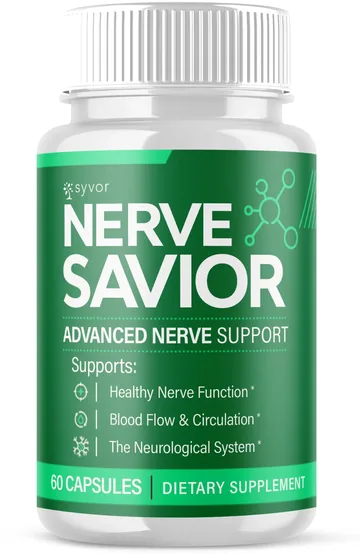
Match your bottle to this labelWhen it arrives, check for 60 capsules, a 600 mg blend and Syvor LLC, and an unbroken safety seal.
See today's price and guaranteeWe earn money when you buy through our order links. You pay the same price.
Step 4: What do the percentages mean?
Five names carry a percentage: bacopa (20%), lutein (5%), zeaxanthin (5%), vitamin B12 (1%) and green tea extract (50%). Nothing on the panel explains what each percentage is measuring.
On extracts, a percentage often tells you how much of one compound the material is set to. For the 5% lutein, that would mean about one part in twenty is the pigment itself, which is how we reach the 6 mg ceiling. For B12 at 1%, it suggests a diluted mix, so the vitamin is a small share of that ingredient's weight.
These are reasonable readings, not facts printed by the brand. If a percentage matters to you, put the question to the seller in writing and keep the reply.
Step 5: What do the inactive ingredients and the distributor line tell you?
The last lines are easy to skip. They list rice flour, magnesium stearate and silica, printed as Silica Dioxide, as inactive ingredients. Their job is to bulk out the capsule and keep the powder moving. The label does not name the capsule shell material, so a vegan badge in the brand art is not confirmed by the panel.
The final line says distributed by Syvor LLC, Salisbury, NC 28146. A distributor is not the same as a manufacturer, and the maker is not published. The caution paragraph on the back also contains a typo, know medical condition, which we quote as printed. Its meaning is clear: ask a physician first if you live with a medical condition.
Two small spelling points help when you compare bottles. The label prints Gingko for ginkgo, and it prints AGP Choline, which we read as alpha-GPC.
What is not published on the label?
- The weight of any single ingredient, including B6 and B12.
- What each of the 20%, 5%, 1% and 50% numbers actually measures.
- The cinnamon species, and the plant part and strength of the ginkgo.
- How much caffeine the green tea extract adds.
- The capsule shell material, the manufacturer and any named testing lab.
Our rule is simple: where the label is silent, we write not published. We never guess a number and call it a fact.
FAQ
Frequently asked questions
What ingredients are in Nerve Savior?
Eleven active ingredients share one 600 mg blend: Himalayan pink salt, cinnamon extract, AGP choline, bacopa, lutein, bilberry leaf powder, vitamin B6, ginkgo, vitamin B12, zeaxanthin and green tea extract. The fillers are rice flour, magnesium stearate and silica.
How many capsules are in a Nerve Savior bottle?
There are 60 capsules in a bottle. The serving is 2 capsules, so a bottle holds 30 servings and lasts 30 days at the label dose.
Does the label show how much B12 or B6 there is?
No. Both vitamins sit inside the 600 mg blend with no amount. By their place in the list, B6 is at most about 86 mg and B12 at most about 667 mcg per serving, but those are ceilings from our math, not measured amounts.
Why does the label say Gingko?
It is a spelling variant of ginkgo. The panel prints Gingko Biloba Powder eighth in the blend. It is the same plant, and the amount and plant part are not printed.
Is there caffeine in Nerve Savior?
It may contain a little. The extract comes last in the blend, and green tea naturally carries caffeine. The label does not say how much, and it does not say whether the extract is decaffeinated.
What does 20% mean next to bacopa?
The label does not say. It most likely points to a standardized extract, but the panel never names what the 20% measures. Ask the seller in writing if you want to match it against the extracts used in studies.
Bottom line
Our view
Our view is that the label is honest about names and silent about amounts. That is fine for a snack and weak for a product sold for nerves, because two of the 11 ingredients are vitamins whose dose matters to your nerves. You cannot add up what you cannot see.
Use the ceilings as a rough guide and treat B6 at its ceiling when you add up your vitamins. If you want real numbers, message the seller through eBay and ask for the B6 milligrams and B12 micrograms per serving.
This page is general information, not medical advice. Nerve Savior is a dietary supplement. It is not FDA approved, and no supplement is. It is not intended to diagnose, treat, cure or prevent any disease. Ask your own doctor or pharmacist about your own health and medicines.
Compare the label photos on the listingRead the listing and its photos on eBay, then match them to the five steps above.
See today's price and guaranteeWe earn money when you buy through our order links. You pay the same price.
Who wrote this
Written and medically reviewed by
Plain-language pages built from the label, the sales listing and linked public health sources.
Last updated . Read our editorial standards and how we check reviews. This website is run by Thenervesavior, a U.S. stocking partner, not by the manufacturer or the distributor named on the label. We earn money when you buy through our order links.
Keep reading